Commercial Parking Lot Maintenance Guide for Hobbs, NM
By Hobbs Paving · Asphalt paving, sealcoating & striping in Hobbs, NM
A parking lot is the first thing a customer, tenant or delivery driver touches when they arrive at your property, and it is one of the largest paved assets most commercial buildings own. Yet it is also the part of a property that is easiest to ignore until something goes visibly wrong — a spreading crack, a pothole that rattles a car, faded lines that leave drivers guessing. For property managers responsible for retail centers, offices, apartment complexes, churches and industrial yards across Hobbs and Lea County, a little planned maintenance goes a very long way. This guide lays out a practical, year-round approach to keeping a commercial parking lot in good shape in the demanding conditions of the Permian Basin.
We maintain commercial lots for businesses throughout Hobbs, Lovington, Eunice, Jal and the surrounding communities along US-62/180 and NM-18. The lots that last are almost never the ones that got the most expensive original paving — they are the ones whose owners stayed ahead of small problems instead of chasing big ones. Everything below is built around that simple idea.
Why parking lots wear out faster in the Permian Basin
Before the maintenance steps make sense, it helps to understand what your lot is actually up against out here. Asphalt is a petroleum-based material, and its worst enemy is the sun. The intense ultraviolet light and triple-digit summer heat we see around Hobbs slowly bake the natural oils out of the binder that holds the pavement together. As those oils dry out, the surface turns gray, grows brittle, and begins to crack. Once that happens, our monsoon rains and blowing grit find their way into every opening.
On top of the climate, commercial lots in Lea County carry loads that suburban driveways never see. Delivery trucks, service vehicles, and the steady stream of heavy oilfield traffic that defines this region concentrate enormous weight on the pavement, especially at entrances, drive lanes and loading areas. Add the shifting caliche soils underneath, and you have a surface under constant pressure from above and below. Maintenance is not about fighting nature to a standstill; it is about slowing the wear enough that your lot serves you for decades instead of years.
Start with regular inspections
The foundation of any maintenance plan is simply looking at the lot on a schedule instead of noticing problems by accident. Walk the entire surface every few months, and always after a heavy storm. You are looking for a short list of warning signs: hairline and widening cracks, areas where water pools instead of draining, soft or sunken spots, raveling where the surface is shedding loose stone, and any faded or damaged pavement markings. A quick written note or a few phone photos each time gives you a record of how fast things are changing.
Pay special attention to the busiest zones. Entrances, exits, drive aisles and the areas where trucks turn or park take the hardest beating and almost always show trouble first. Catching a crack when it is the width of a pencil line, rather than waiting until it has branched into a web and dropped into a pothole, is the single most valuable habit a property manager can build. Nearly every expensive parking lot failure we are called to repair began as something small that went unaddressed through one or two Permian Basin summers.
Keep water moving and cracks filled
If sun is asphalt's first enemy, standing water is its second. Water that lingers on the surface or seeps into cracks works down into the base, softens it, and sets off a chain reaction of potholes and edge failures. That is why good maintenance always starts with drainage. Keep the lot swept and clear of dirt, sand and debris so water can reach the drains and flow off as designed. If you notice puddles that sit for a long time after rain, that low spot needs attention before it becomes a soft, failing patch.
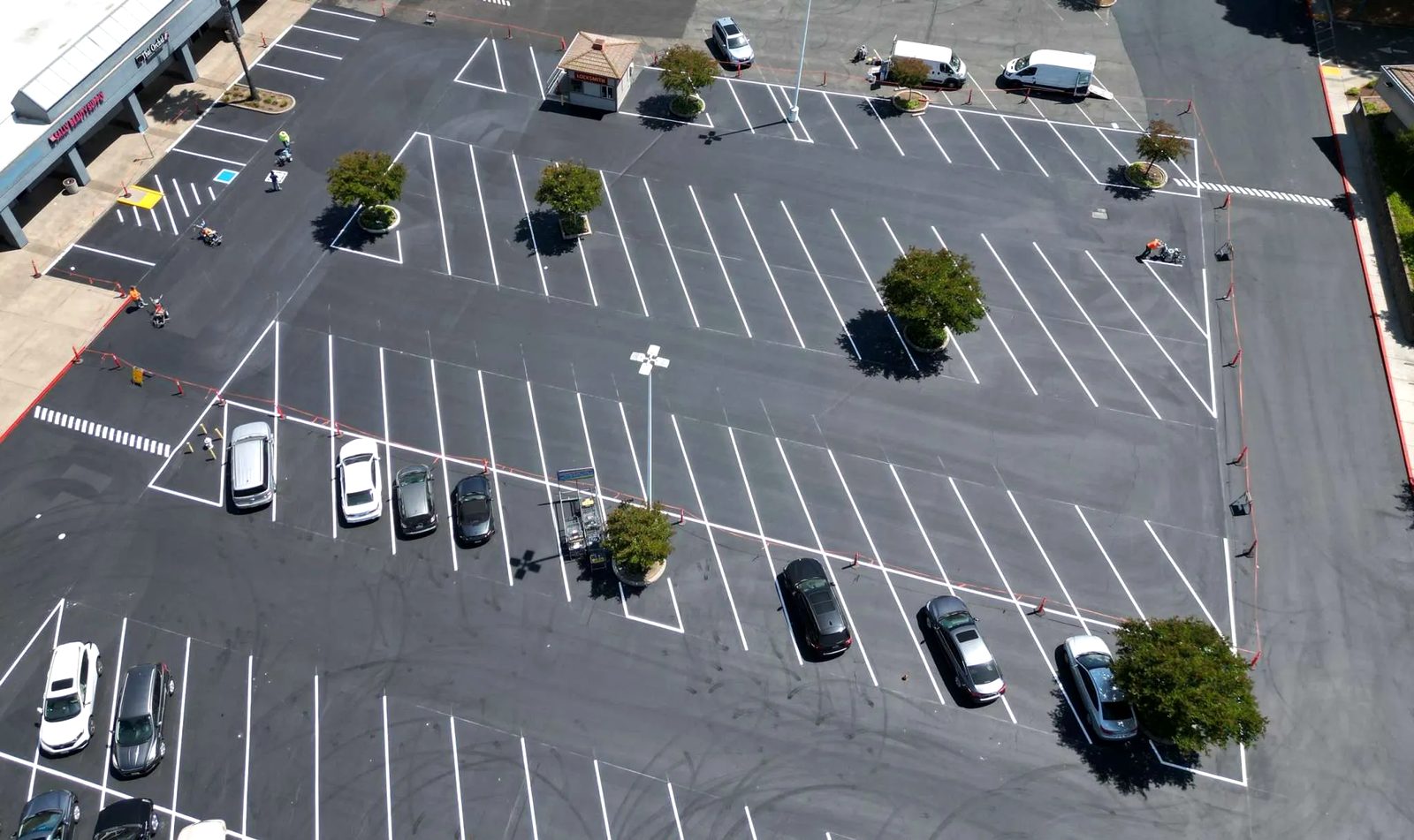
Crack filling is the other half of keeping water out, and it is the highest-return maintenance task there is. Sealing cracks while they are still narrow blocks moisture from reaching the base and stops the crack from spreading under traffic and temperature swings. Done once or twice a year as part of your routine, crack filling costs very little and prevents the far larger expense of base repair down the road. When damage has already progressed to potholes or crumbling areas, prompt patching keeps a small failure from widening into a section that needs full replacement. Our team handles crack filling, patching and full commercial parking lot paving throughout Hobbs and Lea County, and we are glad to build a plan around the specific wear pattern your lot shows.
Want a Maintenance Plan for Your Lot?
Tell us about your commercial parking lot and we will walk it, flag what needs attention, and lay out a straightforward plan — local, licensed and insured across Hobbs & Lea County.
Sealcoating: the protective layer that pays for itself
If crack filling keeps water out of the openings, sealcoating protects the entire surface in between. A sealcoat is a protective coating applied over the asphalt that shields it from ultraviolet light, resists the oil and fuel drips common in commercial lots, and restores that clean, deep black finish that makes a property look cared for. In our climate, where the sun does so much of the damage, sealcoating is one of the most cost-effective things a property manager can do to extend the life of the pavement.
For a busy commercial lot in the Hobbs area, a fresh coat roughly every two to three years is a sensible target, though a heavily trafficked lot in full sun may benefit from a slightly shorter cycle. The exact timing depends on traffic, sun exposure and how the surface is holding up, which is exactly why those regular inspections matter. Beyond protection, a freshly sealed lot signals to customers and tenants that the property is well managed — curb appeal and asset protection in the same step. You can see how we approach the work on our dedicated sealcoating page.
Striping, ADA compliance and safety markings
Maintenance is not only about the asphalt itself — it is also about the paint on top of it. Clear, bright pavement markings direct traffic, define stalls, mark fire lanes, and keep pedestrians safe, and they fade steadily under the Permian Basin sun. Faded or confusing striping does more than look neglected; it creates real safety and liability concerns when drivers cannot tell where to go. Restriping on a regular cycle keeps the lot organized and professional.
Accessibility markings deserve particular care. Properly marked accessible parking spaces, access aisles and signage are legal requirements for commercial properties, and the federal ADA standards set out how those spaces must be sized, marked and located. Faded accessible markings are not just a compliance risk; they can genuinely inconvenience the people who depend on them. When we restripe a lot, we make sure accessible stalls, aisles and directional markings are laid out correctly. Full details on layout and durable, high-visibility paint are on our line striping page.
Building a simple year-round maintenance calendar
The easiest way to keep all of this from slipping is to put it on a calendar so it happens by plan rather than by emergency. A workable rhythm for a Hobbs commercial lot looks something like this. In spring, walk the lot after winter, clear debris, and fill any cracks that opened up. Through the summer, keep the surface swept and watch the high-traffic zones as the heat peaks. In early fall, when temperatures ease into the ideal range for the work, schedule sealcoating and restriping if they are due that year. Heading into winter, do a final inspection and patch any spots that need it before colder nights arrive.
Overlaid on that seasonal rhythm are the longer cycles: crack filling once or twice a year, sealcoating every two to three years, restriping whenever the lines lose their crispness, and prompt repair of any pothole or soft spot the moment it appears. None of these tasks is expensive on its own. Together, and done consistently, they protect a five- or six-figure paved asset for a fraction of what it would cost to reconstruct it. That is the whole logic of parking lot maintenance in a nutshell: small, steady, planned care beats large, sudden, forced repair every time.
Frequently asked questions
How often should a commercial parking lot be maintained in Hobbs, NM?
For a commercial lot in the Hobbs and Lea County climate, plan on a visual inspection every few months, crack filling once or twice a year as needed, sealcoating roughly every two to three years, and restriping whenever the markings begin to fade. The relentless Permian Basin sun and heavy oilfield traffic wear surfaces faster than a milder climate would, so lots here tend to need attention on the shorter end of those ranges. Small, regular upkeep is far cheaper than waiting for cracks to spread into potholes and base failure.
Is it cheaper to maintain a parking lot or repave it?
Ongoing maintenance is almost always the more economical path. Routine crack filling, sealcoating and prompt repair protect the asphalt and the base underneath, which is the expensive part to replace. When a lot is neglected, water works into cracks, undermines the base, and turns small problems into full-depth failures that eventually force a complete repave. A consistent maintenance plan spreads modest costs over time and pushes a costly reconstruction years or even decades further into the future.